
IBO - Non-Engaging 2G Angle Correction Tibase gingiva height 2.5mm Gold Anodised - INTHEX NP (3.5mm) NP. Titanium - # IBO 1501 625
Description
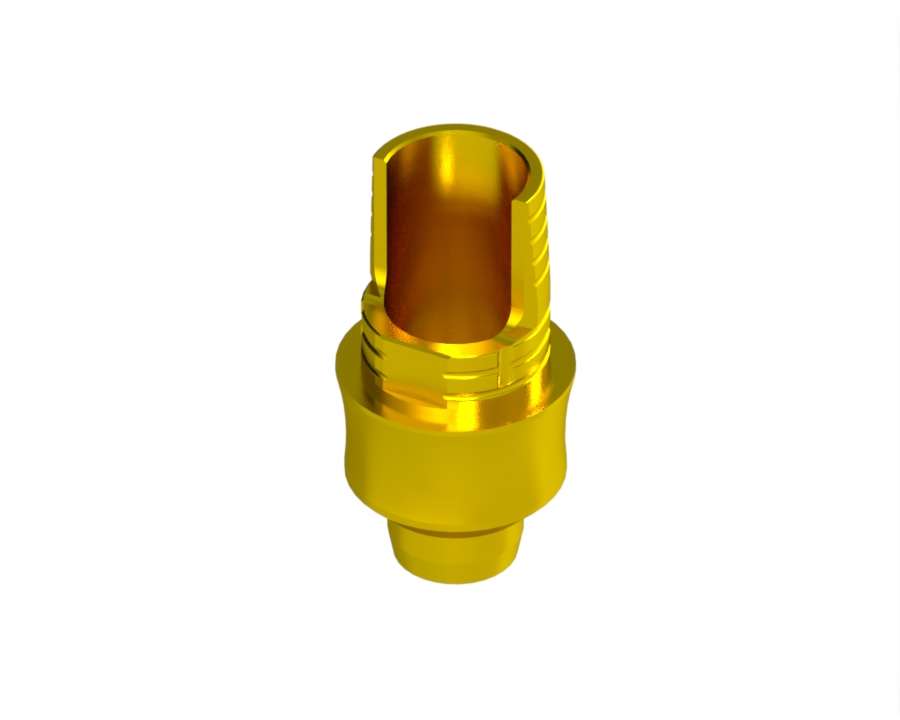
2G Angled Abutment — Internal Hex (INTHEX) NP (NON-Engaging 2G Angle 1501 625)
DESCRIPTION
IBO manufactures the 2G Angled abutment line for restorative rehabilitations on the IBO Internal Hex line (Zimmer®-compatible protocol) where the prosthetic axis must be corrected at the abutment level. The 2G Angled abutment sits on the NP (Narrow Platform) implant connection and presents a corrected prosthetic axis to the superstructure.
This reference, IBO 1501 625, is one variant in the 2G Angled series; the specific angle and Engaging/NON-Engaging interface are encoded in the variant suffix.
CLINICAL APPLICATION
The 2G Angled abutment is selected when the implant's long-axis trajectory does not match the desired prosthetic emergence angle — a common scenario in anterior aesthetic cases and in posterior cases with limited bone availability. Rather than re-orienting the implant body at placement, the prosthodontist corrects the axis at the abutment level.
Final selection of angle, Engaging/NON-Engaging variant and emergence height is determined by the treating prosthodontist based on the implant axis, the prosthetic plan and the soft-tissue contour at the planned restoration site.
PLATFORM & COMPATIBILITY
The 2G Angled abutment in this reference sits on the Internal Hex (INTHEX) NP (Narrow Platform) implant connection, informationally compatible with the Zimmer Dental® Internal Hex Ø3.5 protocol. IBO supplies independent compatible prosthetic components; final clinical use must be verified against the implant manufacturer's documentation.
| Component layer | Reference |
|---|---|
| Host implant body (IBO) | SGI35xx (Ø3.5 mm INTHEX fixtures) |
| This 2G Angled abutment | IBO 1501 625 (NON-Engaging 2G Angle 1501 625) |
| Compatible system (informational) | Zimmer Dental® Internal Hex Ø3.5 |
Brand names are trademarks of their respective owners. Ibodontit S.L. is an independent manufacturer with NO affiliation, sponsorship or endorsement from the listed brands.
TECHNICAL SPECIFICATIONS
| Manufacturer reference | IBO 1501 625 |
|---|---|
| Brand | IBO |
| Product family | 2G Angled Abutment |
| Variant | NON-Engaging 2G Angle 1501 625 |
| Connection system | Internal Hex (INTHEX) |
| Platform | NP (Narrow Platform) |
| Function | Prosthetic-axis correction |
| Material | Ti-6Al-4V ELI Grade 5 (ASTM F136 / ISO 5832-3) |
| Host implant series (IBO) | SGI35xx (Ø3.5 mm INTHEX fixtures) |
| Compatibility (informational) | Zimmer Dental® Internal Hex Ø3.5 |
| Package | 1pk |
| Regulatory | CE marking MDR · ISO 13485:2016 · AEMPS licence |
MATERIALS & SURFACE
IBO abutment components are machined from medical-grade Ti-6Al-4V ELI Titanium, Grade 5, in compliance with ASTM F136 and ISO 5832-3. This alloy is selected for its biocompatibility, mechanical strength and chemical stability in the oral environment.
The component features a polished/machined surface at the gingival emergence for soft-tissue compatibility, and tightly toleranced connection geometry at the implant interface to ensure prosthetic passivity and seal integrity.
All materials and processes are subject to full traceability from raw material to final validation.
STERILIZATION & HANDLING
IBO components are supplied in the manufacturer's validated condition for clinical use. Follow the package insert and IBO Instructions for Use for handling, storage and torque protocol. Do not modify the component geometry, surface or connection seat in any way; doing so compromises the prosthetic interface and the regulatory clearance.
Single-use device. Single patient, single procedure. Discard unused components per local biohazard regulations.
QUALITY ASSURANCE
IBO operates under ISO 13485:2016 quality management for the manufacturing of medical devices, holds the AEMPS Spanish Agency of Medicines and Medical Devices licence, and every IBO component carries the CE marking MDR, assessed by a Notified Body.
Five quality foundations apply to this component: